Almost every week, a patient sits in my clinic and says some version of the same thing:
“I used to spin, do Pilates, run, lift weights, but I’ve stopped everything since I found out I was pregnant.”
“I’ve heard you shouldn’t exercise before 12 weeks.”
“I’ve never really exercised, and I don’t think pregnancy is the time to start.”
“Can I keep my spin classes? Are planks and crunches dangerous now? Will running cause a miscarriage?”
Their questions are often shaped by well-meaning advice; a friend who said running isn’t safe, a mother who warned against lifting anything heavy for fear of straining the abdominal wall. And underneath almost all of it is the same quiet worry: “I don’t want to hurt my baby.”
Every one of these questions is valid, and I’m always happy to answer them. But they point to something bigger that I think we need to talk about openly: at some point, many women have lost confidence in their own bodies and in their ability to simply move.
How Did We Get Here?
Recently I saw a young woman pregnant with her second child. She’d had some light bleeding early in her first trimester, and it frightened her so much that she stopped walking altogether. By the time she came to me at 22 weeks, she had back pain, felt completely lost, and had almost no confidence left in her body. She was barely moving day to day.
That broke my heart, because so much of it was avoidable.
At the time, her doctor had told her to avoid doing too much and to rest as much as possible. Advice like this is well-intentioned, but it makes me reflect on how we, as practitioners, communicate. How do we frame what we say? How do we choose our words, and explain our reasoning, in a way that educates and reassures rather than plants fear? Often it isn’t the medical advice itself that lingers with a patient, but the way it was delivered.
The information available to expectant mothers is overwhelming and often contradictory. Fear, whether it comes from misinformation or from a genuinely difficult past experience, is understandable. But fear that stops a healthy woman from moving her body does her no favours.
Physical Activity in Pregnancy is a “Must-Do”, Not a “Maybe”
I want to be clear about the framing here, because it matters. For most women with an uncomplicated pregnancy, staying active isn’t optional or indulgent; it’s one of the most protective things you can do for yourself and your baby.
Movement in pregnancy supports:
- Your mental health :This is just as important as the physical benefits. Regular physical activity before and during pregnancy is associated with a reduced risk of antenatal and postnatal depression.
- A smoother labour and recovery: Conditioning your body helps prepare you to push, or to recover from a caesarean. Women who stay active through pregnancy often cope better with the demands of labour and delivery.
- Healthier outcomes for baby: Babies of mothers who exercise are more likely to be born at a healthy weight.
- Injury prevention: during pregnancy and into that often-overlooked “fourth trimester,” the year after birth.
When I assess a pregnant patient, I’m not only thinking about the next nine months. I’m thinking about what her body will be asked to do afterwards: the lifting, the carrying, the crawling, walking and running she’ll do alongside a growing child. Preparing for that starts now.
And if you’re not pregnant yet but hoping to conceive in the coming months or years, whether you’ve been trying for six months or a year, this is exactly the time to start conditioning your body, too.
What Exercise Is Safe During Pregnancy?
The good news is that most of what my patients are afraid of is safe to continue, especially if you were already doing it before pregnancy.
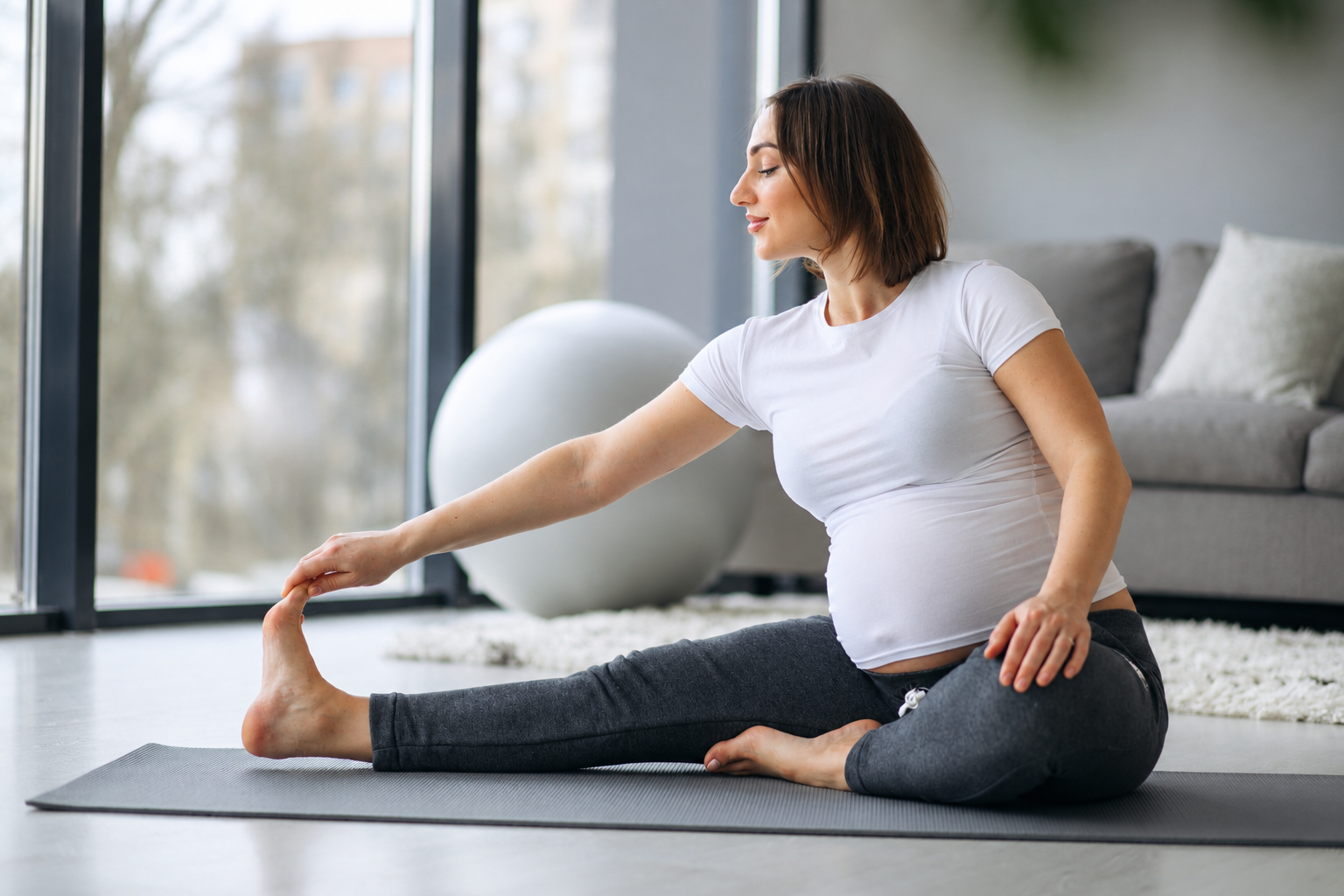
- Walking, yoga, prenatal pilates and regular strength training are excellent, sustainable choices.
- Activities you already do (spin, running, resistance work) can usually be continued in an uncomplicated pregnancy, with sensible adjustments over time.
- A few modifications are reasonable as your bump grows: many women choose to adapt movements like traditional crunches, and reduce high-impact jumping later on. This is about being smart, not stopping altogether.
Think of exercise as a daily habit rather than a formal workout. It doesn’t need to be an hour. A 20-minute walk, a yoga session, a strength class; that’s enough. Some days nausea or fatigue will make it feel impossible, and that’s okay. But in reality, pregnancy is one of the best times of your life to move: to prepare your body, steady your mind, and rebuild trust in yourself.
One important caveat: if you have a genuine contraindication or complication and your OB/GYN has specifically advised you to limit or avoid exercise, that guidance comes first. That’s a different situation, and it must be respected. But please don’t assume your body isn’t strong enough. Let that be a medical decision, not a fearful guess.
And Above All, Keep Walking
The line I find hardest to hear is: “I’ve stopped walking.” Not because of pain. Just… stopped.
Walking is one of your vitals. It’s one of the most fundamental things a human body does, it’s how we get a coffee, do the shopping, carry the groceries, climb the stairs, get to the car. It’s woven into ordinary life, and it’s exactly the kind of movement your child will demand of you soon enough.
So unless there’s a real medical reason, why stop? If you can walk, walk. Don’t let fear convince you that your body has already given up on you; because it hasn’t.
Not sure what’s right for your stage of pregnancy? An osteopath can assess how your body is moving and help you build a plan around your goals. Book a consultation with our osteopath in Dubai.